How to Remove Red Wine and Grease Stains from Linen Tablecloths
A good linen tablecloth is bought to be used, which means it will eventually meet a jug of red wine or a plate of roast lamb. Linen is more forgiving than most fabrics: the flax fibres are stronger wet than dry, they take heat well, and they release stains more readily than cotton when you treat them correctly. What they do not forgive is rubbing, chlorine bleach, or heat applied before the mark has gone. Here is how to handle the two stains that cause the most panic – wine and grease – without wrecking the cloth.
Act in the first few minutes
Blot, don't rub. Press a clean cloth or a folded paper towel onto the stain, lift, and repeat with a fresh patch. Rubbing pushes the wine deeper into the weave and frays the surface of the fibre, which is how a small mark becomes a permanent grey shadow.
If the cloth is still on the table, lift it off rather than scrubbing at it against the wood. Take it to the sink and flush the back of the stain under cold running water. Working from the underside pushes the wine out the way it went in, instead of driving it through the fabric.
At the table, a heap of salt on fresh wine will absorb some of the liquid and buy you time. Sparkling water poured straight over the mark helps if you act within seconds. Neither is a fix, but both make the real fix easier.
Red wine: the fresh stain
- Blot and flush as above, using cold water only. Hot water can set the pigments.
- Work in a drop of washing-up liquid. Stretch the stained area over a bowl, add a little warm water and a small drop of washing-up liquid, and ease it in with your fingertips. Rinse well.
- Soak in oxygen bleach. If a pink shadow remains, dissolve an oxygen-based stain remover (sodium percarbonate) in water as hot as the care label allows – 60°C for white linen, 40°C for coloured – and leave the cloth to soak for thirty minutes to a few hours.
- Wash, then check. Run a normal cycle and inspect the cloth while it is still wet. If you can see the mark, repeat the soak before anything dries.
Red wine: the dried or set-in stain
An old wine stain is slower work but rarely hopeless. Sponge it with white vinegar diluted with an equal quantity of cold water, leave it for ten minutes, then rinse and treat with washing-up liquid as above. On white linen only, a 3% hydrogen peroxide solution dabbed on with a cotton bud will lift stubborn purple marks. Test it on an inside hem first, because it can lighten dyed linen, and never mix it with vinegar in the same bowl.
Bicarbonate of soda made into a paste with a little water is worth a try on a dried mark: spread it on, leave it for twenty minutes, then rinse. It is gentle and will not damage the fibre, though it works better on fresh marks than on anything that has already been through a tumble dryer.
Grease and oil
Grease needs the opposite approach to wine: heat helps, and a degreaser does the real work.
First lift off anything solid – a spoon or the back of a knife will do. Then cover the mark with cornflour or talc, press it gently into the fabric and leave it for twenty minutes or so. The powder draws oil out of the weave; brush or shake it away.
Next, a drop of washing-up liquid worked into the stain with your fingertips. Leave it for ten to fifteen minutes, then rinse with water as hot as your hands can bear. For a set-in grease mark, soak the cloth in hot water with a scoop of washing soda (sodium carbonate) and oxygen bleach – linen can take a hot soak, and the heat is what releases the fat. Keep washing soda away from any wool or silk in the wash, and check the care label on hand-embroidered pieces before soaking.
Washing, drying and pressing
Wash linen at 40–60°C with a decent detergent, and give the cloth room to move in the drum; an overfilled machine does not rinse properly. Two things to leave out: fabric conditioner, which coats the fibres, dulls the natural sheen and leaves linen less absorbent, and chlorine bleach, which weakens flax over time and yellows white linen rather than brightening it.
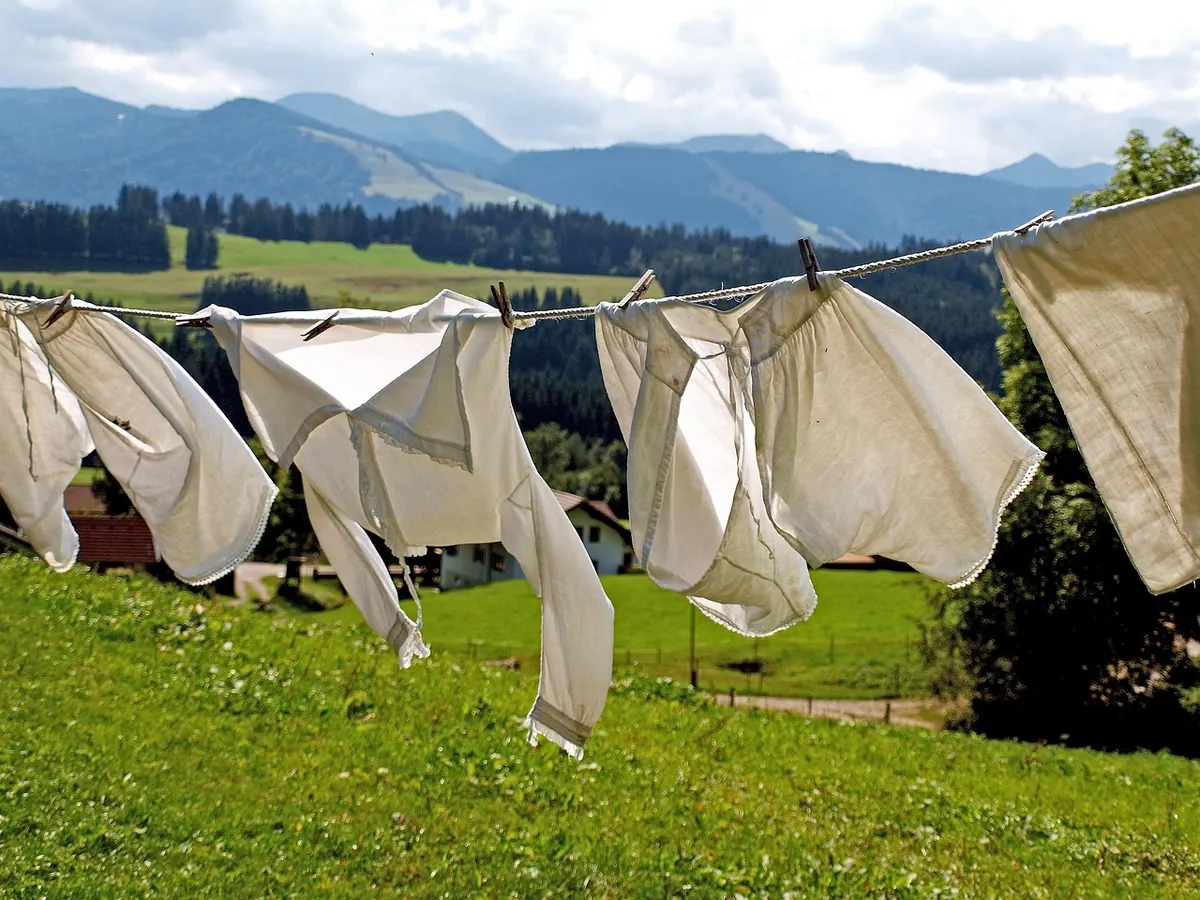
White linen benefits from a few hours on the line in sunlight, which has a mild brightening effect. Dry coloured linen in the shade. Iron while still slightly damp, on the reverse, with a hot iron – and never iron over a mark you can still see, because the heat will fix it for good.
Habits that quietly ruin table linen
- Rubbing a stain instead of blotting it.
- Using hot water on red wine, or cold water on grease, out of habit.
- Reaching for chlorine bleach on white linen.
- Adding fabric conditioner "for softness".
- Tumble drying or ironing before the stain is out.
- Leaving damp cloths in the machine overnight – mildew spots are far harder to shift than wine.
- Folding a stained cloth away "for later". Aged marks are the ones that stay.
Coloured linen, vintage pieces and when to stop
Test every treatment on an inside hem or corner first, especially on dyed linen and anything with coloured embroidery. Vintage cloths, and linen that has been stored for decades, can be weaker than they look: use cooler water, shorter soaks, and skip the washing soda altogether.
If a mark survives three proper attempts, more rubbing will only thin the fabric. A specialist textile cleaner is the sensible move for an heirloom, and will assess dyes and fibre strength before touching it. Everyday table linen usually gives in at the second or third soak – and keeping a small stain kit in the sideboard (salt, washing-up liquid, oxygen bleach, cornflour) means you will act while it still matters.
Photo: JillWellington / Pixabay