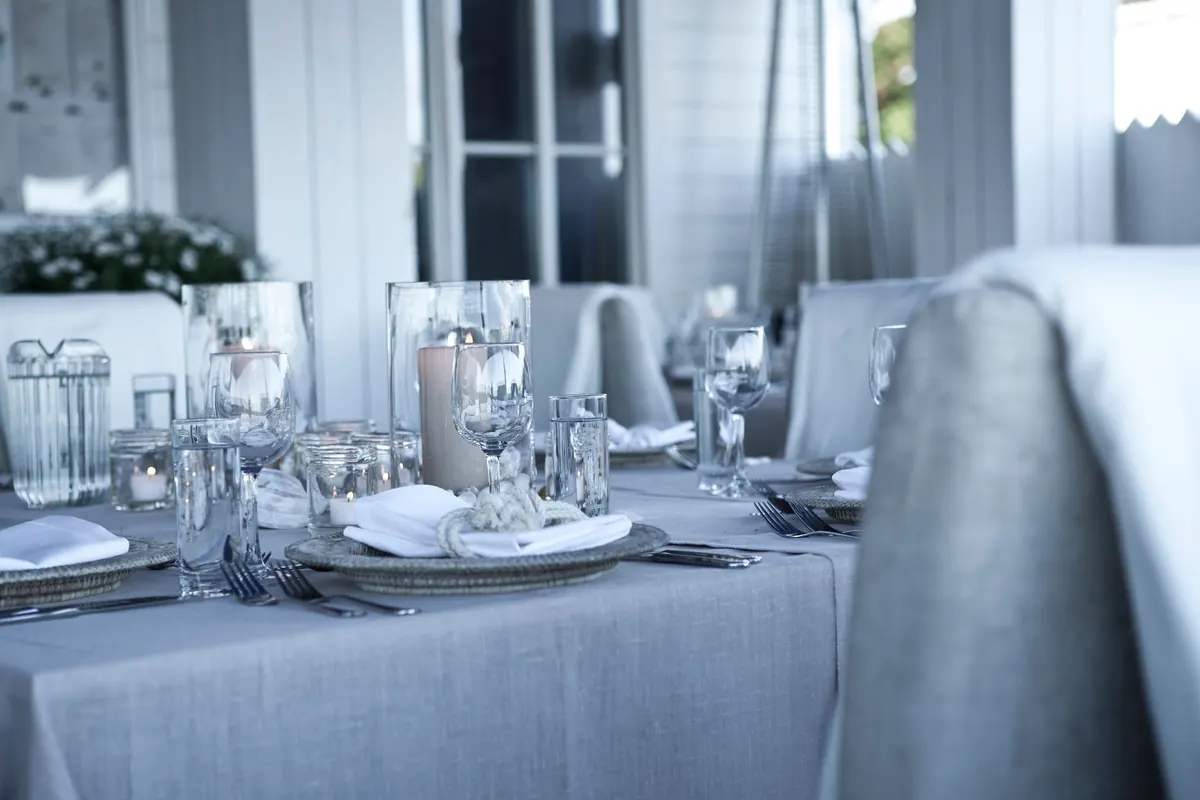
How to Set a Linen Table for Sunday Lunch: A Checklist
Sunday lunch has its own rhythm. The meat goes in, the potatoes get their edges, and someone is always asking whether it is too early to open the wine. The table should feel like part of that rhythm: generous, calm, and ready for elbows, gravy and second helpings. Linen does that better than almost anything else. It softens the room, holds a crease, and makes a plain roast feel like an occasion.
This checklist is for a relaxed British Sunday lunch rather than a formal dinner. You do not need a full banquet set. You need a tablecloth that fits, napkins that can handle a bit of grease, and glassware that is easy to reach. Work through the steps below and you will have a table that looks considered without feeling stiff.
Start with the tablecloth: size and drop
Everything else sits on the cloth, so get this right first. Measure your table properly. For a rectangular table, note the length and width. For a round one, measure the diameter. Do not guess from memory; tables have a way of being a few centimetres wider than they look.
The drop is how far the linen hangs over the edge. A short drop looks casual, almost like a runner. A long drop is more formal and can pool on the floor, which is not practical with guests. For a relaxed Sunday lunch, a drop of around 20 to 30 cm works well. It covers the table edge, frames the setting, and still leaves knees free.
How to calculate the drop
Add twice your chosen drop to each table measurement. If your table is 180 cm by 90 cm and you want a 25 cm drop, look for a cloth around 230 cm by 140 cm. For a round table, add twice the drop to the diameter. If you are between sizes, go larger rather than smaller; a slightly generous cloth can be tucked or folded, but a skimpy one will always look mean.
Fabric and colour
Pure linen is the classic choice. It creases, and that is part of its character. If you prefer a smoother surface, a linen-cotton blend is easier to iron and still feels special. For a roast, think about colour. Warm white, oatmeal, sage, soft grey and faded blue all work. Patterns are forgiving: a subtle stripe or check hides small splashes better than a plain pale cloth. If you love white, keep a stain treatment nearby and deal with drips before they set.
Runners and placemats: when to use each
A runner can do several jobs. It adds colour, protects the centre of the table, and gives you a place to put hot serving dishes without covering the whole surface. On a rectangular table, run it lengthways. On a round table, a short runner across the centre can work, or skip it and use placemats instead.
Placemats are the practical option for a family lunch, especially if children are at the table. They define each setting and take the heat from plates. If you are using a tablecloth, you can still add placemats, but choose thin ones. Thick woven mats on top of linen can make the table feel cluttered. A good rule is one layer of pattern: if the cloth is patterned, keep the runner or mats plain. If the cloth is plain, you can introduce a stripe or texture.
Position a runner so it does not sit under anyone's plate. It should run down the middle, leaving at least 15 cm of clear table for each place setting. Placemats should sit about 2 to 3 cm from the table edge, with the cutlery just beyond them. For a roast, put a large trivet or board in the centre for the joint, and smaller ones near the vegetables.
Napkins that work with a roast
A Sunday roast is not the moment for tiny, stiff napkins. You want something that can cover a lap and mop up a small spill without disintegrating. A 40 to 45 cm square is the most useful size. If you have larger 50 cm napkins, they feel luxurious and are especially good if you are serving something with gravy.
Linen and linen-cotton napkins are absorbent and look right with a linen cloth. Dark colours hide wine and gravy marks, but pale napkins can be treated and washed. If you are worried about stains, choose a mid-tone: soft grey, oatmeal, or a muted green.
A simple fold that works
You do not need a complicated fold. For a relaxed lunch, fold each napkin in half, then in half again to make a rectangle. Place it to the left of the forks, or on the plate if you prefer. If you are using napkin rings, a simple roll is enough. Avoid tall fans and shapes that need re-pressing before pudding.
A napkin should be within reach when guests sit down. If you are serving soup or a starter, you can place it on the side plate. For the main roast, left of the forks is traditional and keeps
Photo: Terje Sollie / Pexels